Thanks Yoder
Sunday, December 28, 2008

Zimbabwe's economic struggles continue
Reading this article should be a small wake up call to understand what sanctions can do. It isn't the governments or the people in power that are hurting the most; it is always the civilians that suffer the most. Starvation, disease and death are all too common in the region, but it's okay because it is them, not us. When sanctions bring about living conditions that only cockroaches could enjoy, it is obviously a dark soul with a heart of coal that would allow for this to continue. This was on CNN tonight, and I thought it would be appropriate to post here so we could take a look at the truth of the economic policies that we force on countries around the world that aren't part of the final plan.
Zimbabwe's children 'wasting away' - aid group
HARARE, Zimbabwe (CNN) --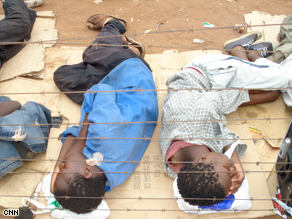 Some of Zimbabwe's children are "wasting away" as political turmoil and economic crisis have caused a severe food shortage, according to a report from Save the Children.
The number of acute child malnutrition cases has risen by almost two-thirds in the past year, the report from the UK-based agency said in its appeal to world donors for help.
"There is no excuse for failing to provide this food," program director Lynn Walker said. "The innocent people of Zimbabwe should not be made to suffer for a political situation that is out of their control."
Five million Zimbabweans -- out of a population of about 12 million -- are in need of food aid now, the report said. The group is appealing for 18,000 tons of food for next month.
"We have already been forced to reduce the rations of emergency food we are delivering because there isn't enough to go around," the report said. "If, as we fear, the food aid pipeline into Zimbabwe begins to fail in the new year the millions of people who rely on emergency food aid will suffer."
Zimbabwe is facing its worst economic and humanitarian crisis since its independence from Great Britain 28 years ago. There is an acute shortage of all essentials such as cash, fuel, medical drugs, electricity and food.
President Robert Mugabe blames the crisis on the sanctions imposed on him and his cronies by the West for allegedly disregarding human rights. But Mugabe's critics attribute the crisis to his economic policies.
As the economy has faltered for almost a decade now, a cholera epidemic is raging, fueled by the collapse of health, sanitation and water services in Zimbabwe. The epidemic has claimed more than 1,100 lives and infected more than 20,000 people since its outbreak in August.
Health experts have warned that the water-borne disease could infect more than 60,000 unless its spread is halted.
The political crisis rose to a boil in this year when the opposition party claimed that it won the presidential election, but Mugabe's government refused to recognize the result. Instead, the race was thrown to a runoff, which was boycotted by the opposition.
Mugabe signed an agreement with the opposition in September to form a unity government, but a bitter dispute over the division of cabinet seats has prevented its formation.
Inflation is so severe that the government was forced to print $10 billion currency notes last week, with each expected to buy just 20 loaves of bread
Zimbabwe's children 'wasting away' - aid group
HARARE, Zimbabwe (CNN) --
Some of Zimbabwe's children are "wasting away" as political turmoil and economic crisis have caused a severe food shortage, according to a report from Save the Children.The number of acute child malnutrition cases has risen by almost two-thirds in the past year, the report from the UK-based agency said in its appeal to world donors for help.
"There is no excuse for failing to provide this food," program director Lynn Walker said. "The innocent people of Zimbabwe should not be made to suffer for a political situation that is out of their control."
Five million Zimbabweans -- out of a population of about 12 million -- are in need of food aid now, the report said. The group is appealing for 18,000 tons of food for next month.
"We have already been forced to reduce the rations of emergency food we are delivering because there isn't enough to go around," the report said. "If, as we fear, the food aid pipeline into Zimbabwe begins to fail in the new year the millions of people who rely on emergency food aid will suffer."
Zimbabwe is facing its worst economic and humanitarian crisis since its independence from Great Britain 28 years ago. There is an acute shortage of all essentials such as cash, fuel, medical drugs, electricity and food.
President Robert Mugabe blames the crisis on the sanctions imposed on him and his cronies by the West for allegedly disregarding human rights. But Mugabe's critics attribute the crisis to his economic policies.
As the economy has faltered for almost a decade now, a cholera epidemic is raging, fueled by the collapse of health, sanitation and water services in Zimbabwe. The epidemic has claimed more than 1,100 lives and infected more than 20,000 people since its outbreak in August.
Health experts have warned that the water-borne disease could infect more than 60,000 unless its spread is halted.
The political crisis rose to a boil in this year when the opposition party claimed that it won the presidential election, but Mugabe's government refused to recognize the result. Instead, the race was thrown to a runoff, which was boycotted by the opposition.
Mugabe signed an agreement with the opposition in September to form a unity government, but a bitter dispute over the division of cabinet seats has prevented its formation.
Inflation is so severe that the government was forced to print $10 billion currency notes last week, with each expected to buy just 20 loaves of bread
Subscribe to:
Posts (Atom)
